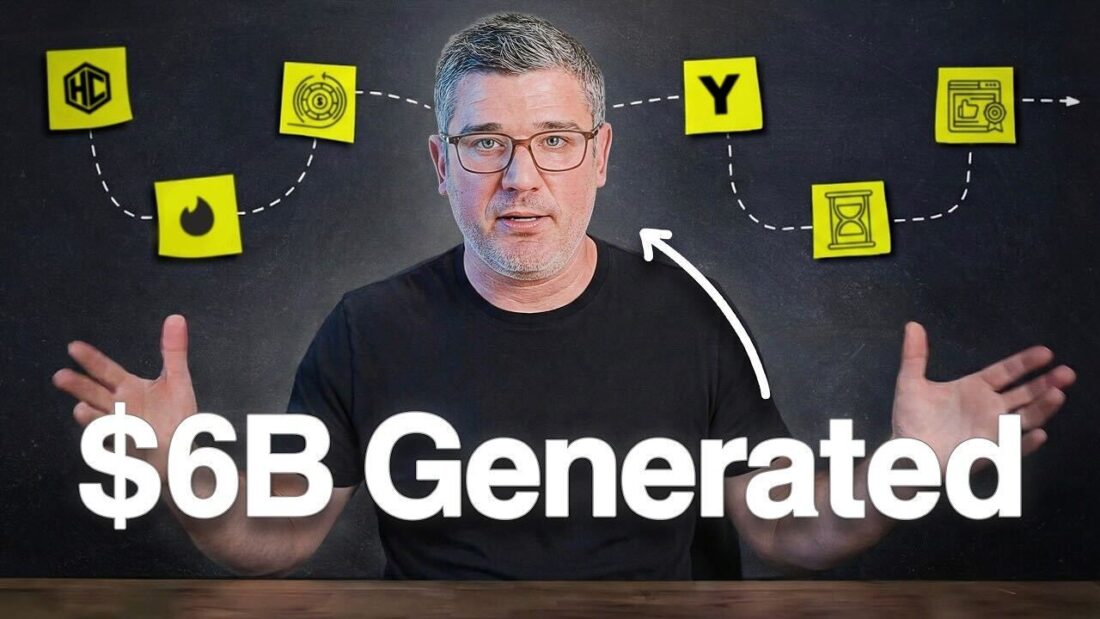
A framework from Alley Group CEO, Vince Nocerino, on the assumptions that stall growth — and how performance-first brands break through them.
Most brands that plateau aren’t making one catastrophic mistake. They’re making three quiet ones — and they don’t even know it.
After working on top brands like Tinder, Yeti, and HexClad, and driving over $6 billion in revenue, I’ve seen the same patterns repeat themselves with alarming consistency. Brands with great products. Strong teams. Real ambition. And yet — they can’t seem to crack the ceiling.
The blame game usually starts: sales points at marketing, marketing points at the agency, the agency points at the budget. Round and round it goes.
But here’s the truth: brands don’t stall because of one department or one isolated mistake. They stall because their entire growth system is built on incorrect assumptions. Fix the assumptions, and you fix the system.
Here are the three fatal flaws I see most consistently — and what to do instead.
Fatal Flaw #1: Channel Hopping
The assumption: more platforms = more scale.
This one is seductive. A competitor finds traction on TikTok. Leadership sees it. The decision gets made in a boardroom: “We need to be on TikTok.” Within weeks, the LinkedIn creative gets repurposed, budget gets shifted, and the team celebrates the surge in site traffic.
Then the back-end numbers come in.
We worked with a client in exactly this situation. They had been performing solidly on Google and LinkedIn when they made the jump to TikTok after watching a competitor gain visibility there. They repurposed their existing LinkedIn ad creative and moved significant budget over. Traffic to the site increased — which looked, on the surface, like growth.
But when we dug into the back-end data, the story was different. Cost per lead had increased by nearly 75%. Lead quality — as reported by their own sales team — dropped significantly. The vanity metrics looked great. The business metrics were a disaster.
The root cause wasn’t the channel. It was the assumption that all platforms are interchangeable.
They’re not. Every platform creates a distinct psychological environment:
- Meta: People see themselves and their lifestyle reflected back.
- TikTok: Raw, unpolished content wins. Polish signals inauthenticity.
- YouTube: People arrive to learn. Depth and explanation are rewarded.
- Google: Intent-driven. Users are already comparing — they just need to choose you.
- LinkedIn: Expertise and proof drive credibility. Soft content falls flat.
- Programmatic/Display: A scaling amplifier — not a starting point. It works best once something’s already proven.
When you force the wrong creative into the wrong context, what you get isn’t a performance problem — it’s a misalignment problem. The signals get diluted. Algorithms get confused. And teams waste months optimizing toward the wrong outcomes.
What we did for that client: Rather than abandon TikTok entirely, we pulled back budget and repositioned it as a community-building layer. We introduced YouTube as the primary performance channel, where educational content could do its job. Within months, cost per lead improved by 35% and lead quality climbed by roughly 45%.
The lesson: successful brands don’t chase channels. They orchestrate them. Think of it as a conversion engine — start with search and Meta as your foundation, then layer in YouTube for awareness, LinkedIn for credibility, TikTok for community, and programmatic for scale once the core is proven.
Fatal Flaw #2: Treating Creative as an Afterthought
The assumption: creative is decoration, not engine.
The paid media landscape has fundamentally shifted. Not just because targeting got harder or budgets got tighter — but because algorithms got smarter.
We’re at a point where the algorithm carries more of the optimization load than the media buyer does. Audience targeting, bid strategy, placement decisions — the machine handles it. What the machine can’t generate is the creative itself. That’s still on you. And it matters more than ever.
Current research puts creative as the driver of 60–90% of what triggers a purchase in paid campaigns. Sixty to ninety percent. If you’re spending meaningful money on media and treating creative as a line item rather than your primary lever, you’re leaving most of your budget’s potential on the table.
When we audit new clients, here’s what we almost always find: they can tell us which ad performed best at the top of the funnel. What they can’t tell us is why it worked. Was it the hook? The visual framing? The narrative arc? The messaging structure in the first three seconds? Without that understanding, you can’t replicate success — you can only hope to stumble back into it.
This is why we’ve invested heavily in creative research and analytics tools — platforms like VidMob and Motion — that go beyond top-level performance data to break down the specific components driving results: pacing, visual framing, messaging architecture, narrative structure, emotional triggers. AI-powered tools are now able to map these elements against actual human behavioral data, giving you a real roadmap rather than guesswork.
The shift to make: stop reviewing creative as a passive by-product of your campaigns. Start treating it as the most active performance driver you have — and build the research infrastructure to understand what’s working and why.
Fatal Flaw #3: Measuring the Wrong Things
The assumption: platform metrics reflect business health.
This is arguably the most dangerous of the three. And it’s the one most agencies are complicit in.
I’ve sat in too many client meetings where an agency walks in beaming about a record-breaking CPA month on Meta — while the client knows their back-end revenue tells a completely different story. The platform said you won. The business said you didn’t. Someone is measuring the wrong thing.
Here’s the mechanism: when you optimize toward vanity metrics — clicks, impressions, platform-reported ROAS — you’re training the algorithm to deliver those metrics. And it will. Happily. But if those metrics don’t connect to actual revenue, contribution margin, or customer lifetime value, you’ve built a feedback loop that optimizes your campaigns further and further away from your real business goals.
Perfect attribution is genuinely hard. It’s complex, often expensive, and frankly — even with unlimited budget and data — it will never be perfect. But imperfect measurement is far better than no measurement at all.
Three cost-efficient approaches to start with:
- MER (Marketing Efficiency Ratio): Take your total site revenue and divide it by total paid media cost. Track this daily or weekly over time. This is your north star — it shows you how your overall paid media spend correlates with real business outcomes, including awareness campaigns that look weak in-platform but are quietly driving revenue.
- Simple incrementality tests: If you have sufficient data, test whether a platform, creative, or product is actually driving incremental lift — or whether the sales would have happened anyway.
- Channel trend analysis paired with back-end financial reporting: Layer platform trend data against your actual revenue reporting. Patterns emerge that you’ll never see inside a single ad platform’s dashboard.
The moment you connect back-end metrics — CRM data, contribution margin, customer lifetime value — to your campaign optimization, the algorithm starts learning your actual business goals. That’s when the system starts working for you, not just for the platform.
A useful signal to watch: if you run an awareness campaign that looks weak in-platform and you turn it off — and your overall sales dip shortly after — you have a measurement problem, not a campaign problem. MER would have shown you the truth.
Fix the System, Not the Symptoms
Most brands trying to break through a growth plateau are looking for a tactical fix — a new channel, a new ad format. But the ceiling usually isn’t tactical. It’s systemic.
When you stop chasing channels and start orchestrating them — when you treat creative as the primary performance driver it actually is — when you tie your optimization signals to real business outcomes rather than platform dashboards — you’ve built the foundation that 99% of the brands we see haven’t.
That’s what a performance-first growth system looks like. And it’s the only kind that scales.